
The Complete Guide to Borrowing Against Luxury Watches
An authoritative examination of asset-backed horological financing: loan structures, appraisal methodology, vault custody standards, and non-recourse risk management.
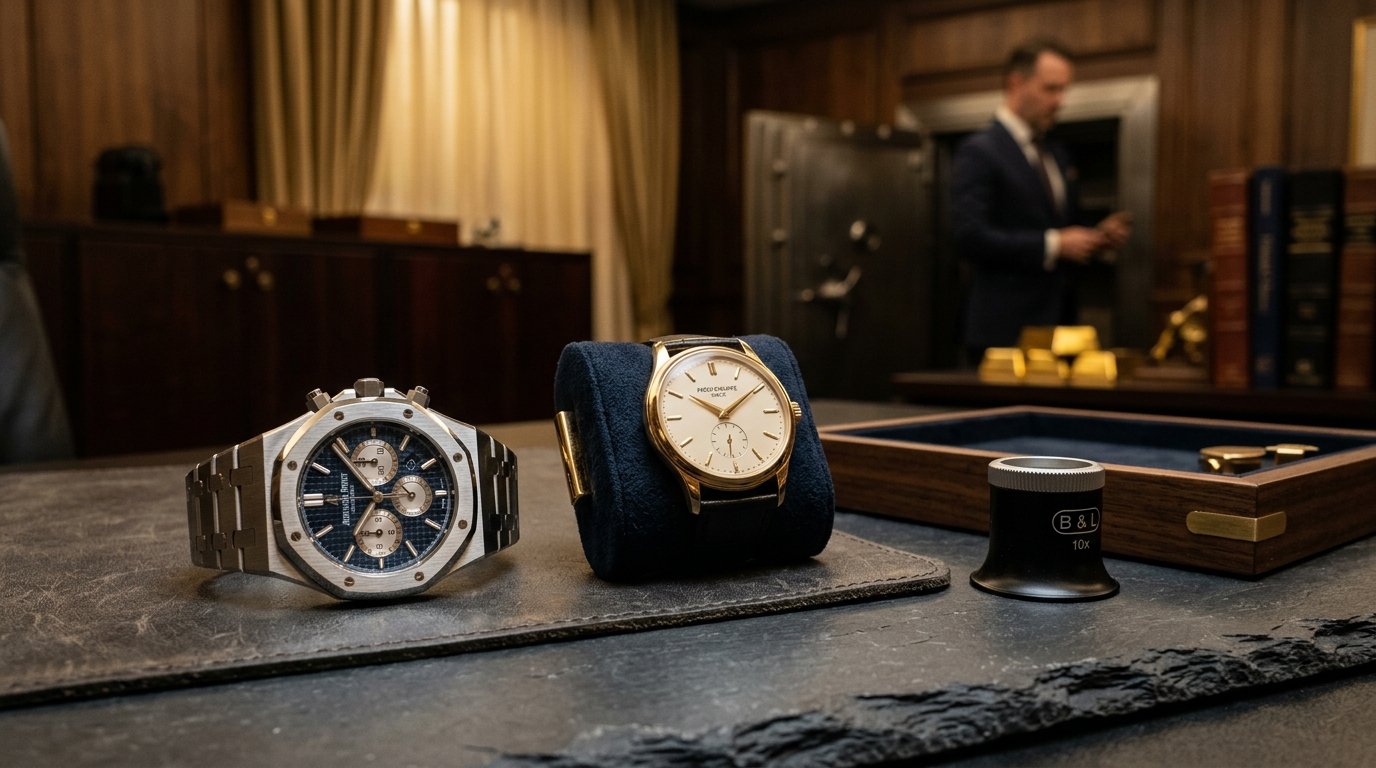
Executive Summary & Key Takeaways
- A watch collateral loan provides immediate liquidity (typically up to 80% of secondary market wholesale value) while preserving full legal title upon repayment.
- True luxury collateral loans are 100% non-recourse: zero credit inquiries, zero income verification, and zero debt reporting to credit bureaus if you elect not to repay.
- Valuations are driven by active secondary wholesale clearing prices (dealer bid-ask benchmarks), not inflated retail MSRP or insurance replacement appraisals.
- Institutional custody mandates private, climate-controlled UL Class 3 physical vaults protected under comprehensive Lloyd's of London all-risk insurance policies.
1. The Evolution of Horological Collateral Finance
For high-net-worth collectors, family offices, and entrepreneurs, luxury timepieces have transitioned from passive personal accessories into recognized alternative asset reserves. Blue-chip manufactures like Rolex, Patek Philippe, Audemars Piguet, and Richard Mille produce mechanical assets with liquid, globally transparent secondary markets that clearinghouses trade daily.
When temporary capital is needed—whether to bridge real estate transactions, fund business inventory, or seize immediate investment opportunities—selling a prized timepiece permanently is often an inefficient and emotionally undesirable strategy. Asset-backed watch loans provide a non-bank capital alternative that converts horological equity into immediate cash without liquidating the underlying asset.
Capital Efficiency Rule
Selling a timepiece permanently incurs dealer margins (15%–25%), potential capital gains tax events, and future replacement cost inflation. A short-term collateral loan preserves the asset's future appreciation for a fraction of the transaction friction.
2. The Operational Mechanics: From Appraisal to Disbursement
The underwriting process for a luxury watch loan differs fundamentally from conventional consumer credit or commercial bank facilities. Because the loan is secured entirely by the physical asset, underwriting focuses exclusively on asset authenticity, condition, and market liquidity rather than the borrower's personal balance sheet.
The loan lifecycle generally encompasses four sequential phases: digital indicative evaluation, insured armored transit, in-vault physical inspection, and electronic wire disbursement.
Phase I: Digital Indicative Term Sheet (2–4 Hours)
The borrower submits reference numbers, serial prefixes, completeness details (box, guarantee card, service records), and high-resolution condition photographs.
Specialist underwriters benchmark the reference against live secondary dealer indices to establish wholesale clearing value and deliver a written indicative term sheet specifying loan advance amount, monthly rate, and term duration.
Phase II: Insured Armored Logistics
Upon preliminary term agreement, the lender issues a prepaid, fully insured shipping manifest through specialized armored couriers (e.g., Brink's or Malca-Amit).
Shipments are covered under 100% all-risk transit insurance policies up to the fair market replacement value, bypassing common limitations found with commercial postal carriers.
Phase III: Dual-Custody Horological Verification
The package is unsealed inside a high-security intake room under continuous dual-custody 4K video recording.
Certified watchmakers examine case bevel integrity, dial authenticity, laser inscriptions, and mechanical amplitude on electronic Witschi timegraphers.
Phase IV: Wire Disbursement & Vault Induction
The final digital agreement is executed. Capital is transferred immediately to the borrower's account via same-day Fedwire.
The timepiece is sealed in a serialized, tamper-evident container and placed in a dedicated safety deposit box inside a UL Class 3 physical depository.
3. Understanding Loan-to-Value (LTV) and Wholesale Pricing
A critical distinction in professional collateral finance is the difference between manufacturer suggested retail price (MSRP), insurance replacement value, and secondary wholesale clearing price.
Lenders formulate Loan-to-Value ratios against the wholesale secondary market value—the amount a professional watch dealer would wire today to acquire the watch immediately in cash. Advance rates typically range from 65% to 80% depending on the brand and reference liquidity tier.
| Manufacture / Reference Tier | Typical Secondary Wholesale Range | Standard Advance Rate (LTV) | Indicative Capital Allocation |
|---|---|---|---|
| Rolex Modern Sports (Submariner, GMT, Daytona) | $12,000 – $35,000+ | Up to 80% | $9,600 – $28,000+ |
| Patek Philippe Nautilus & Aquanaut | $45,000 – $120,000+ | Up to 80% | $36,000 – $96,000+ |
| Audemars Piguet Royal Oak (15500, 16202) | $35,000 – $70,000+ | Up to 80% | $28,000 – $56,000+ |
| Richard Mille Core Sports (RM 011, RM 035) | $140,000 – $300,000+ | Up to 80% | $112,000 – $240,000+ |
| Omega Modern Master Chronometers | $4,000 – $15,000+ | 75% – 80% | $3,000 – $12,000+ |
4. The Non-Recourse Advantage: Zero Credit Risk
The defining structural benefit of an institutional asset-backed loan is its non-recourse structure. In standard personal loans or commercial credit lines, default triggers debt collection procedures, deficiency judgments, and catastrophic damage to personal credit scores.
Under a non-recourse collateral contract, the pledged timepiece represents the lender's sole and exclusive remedy. If the borrower chooses not to repay or extend the loan upon maturity, the obligation is completely extinguished. The lender simply sells the watch on the secondary wholesale market to recover the balance.
Credit Agency Isolation
Vaultmark Lending never reports loan originations, monthly payment statuses, or defaults to consumer credit bureaus (Equifax, Experian, TransUnion). Your personal credit file remains completely unaffected.
5. Custody Protocols: Physical Security & Lloyd's Insurance
When relinquishing custody of an asset worth tens or hundreds of thousands of dollars, storage security is paramount. Professional collateral lenders do not store watches in retail counters or commercial office safes.
Timepieces must be stored within dedicated commercial physical depositories constructed to Underwriters Laboratories (UL) Class 3 standards. These subterranean installations feature 18-inch reinforced steel-and-concrete walls, multi-factor biometric palm scanners, dual-key entry protocols, and round-the-clock armed security monitoring.
Furthermore, custody must be backed by an independent, non-affiliated insurance policy—specifically underwritten by Lloyd's of London syndicates—covering 100% of fair market replacement value against all risks including theft, fire, transit damage, and natural disasters.
Frequently Asked Questions
Whenever possible, modern timepieces are authenticated non-invasively through micro-optical examination of the dial, laser-etched markings, and acoustic Witschi timegrapher diagnostics. Exhibition casebacks allow direct inspection. Solid casebacks are only unsealed in sterile clean-bench horological laboratories when movement verification cannot be achieved externally.
Related Guides & Articles
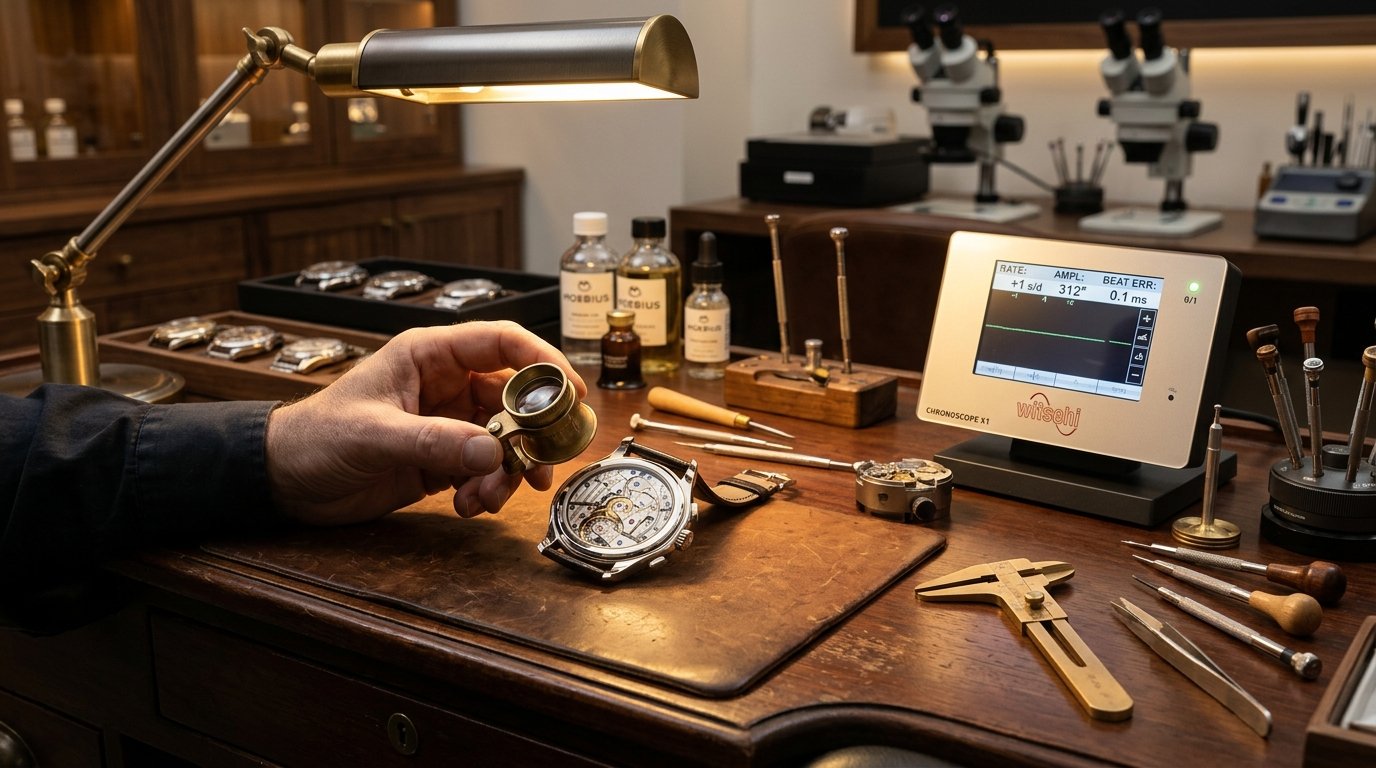
How Watch Valuations Work: Wholesale Data, Condition & Mechanics
Discover the exact four-pillar framework horologists use to determine collateral loan values. Learn why retail appraisals are disregarded and how movement amplitude and unpolished chamfers impact loan offers.

Rolex Loan-to-Value Benchmarks: Reference Valuations & LTV Guide
Explore current loan-to-value benchmarks and indicative capital advance amounts across key Rolex sports and dress references. Understand how reference liquidity tiers impact lending terms.

Collateral Loan vs. Selling Outright: Capital Without Asset Surrender
Evaluate the financial trade-offs between selling your luxury watch and securing a non-recourse collateral loan. Compare dealer discounts, auction fees, tax liabilities, and future replacement costs.